Why a Consultation Is Not a Vote
Why a consultation is not a vote: follow a neighbourhood bus-route proposal to see how residents’ views inform a decision without deciding it.
Why is a consultation not a vote? Imagine a council considering a change to a neighbourhood bus route. Residents are invited to comment on two possible routes, but the council has not promised to choose whichever receives the most support. The consultation gathers evidence about how the options may work; the formal decision remains with the body authorised to make it.
That distinction can feel unsatisfying when people spend time sharing detailed views. It becomes clearer when you follow what happens to those views, from the question posed to the final decision. A consultation can influence a choice without transferring the power to make it.
The proposal on the table
In this invented situation, the council is considering whether to change the route of a local bus. One option keeps the existing path. Another diverts buses along a nearby road to serve a new cluster of homes, while leaving some current passengers with a longer walk.
The transport team has developed both options and set out what it knows: which streets each would serve, where stops might move, and what operational questions remain. The elected council committee will decide whether to approve a change. It asks residents, passengers, local businesses and community groups for views before the committee considers the proposal.
The consultation is not a ballot between the two routes. Nor is it a promise to adopt the most popular response. Its purpose is to help decision-makers understand consequences they may have missed, test assumptions and consider whether the options need revision.
Before replying, check what decision is actually open.
What the invitation asks
The council’s invitation asks people which route would serve them better and why. It also asks about access to stops, the walk to school, connections with other buses and times of day when service matters most. These questions invite experiences and reasons, not simply a mark beside a preferred option.
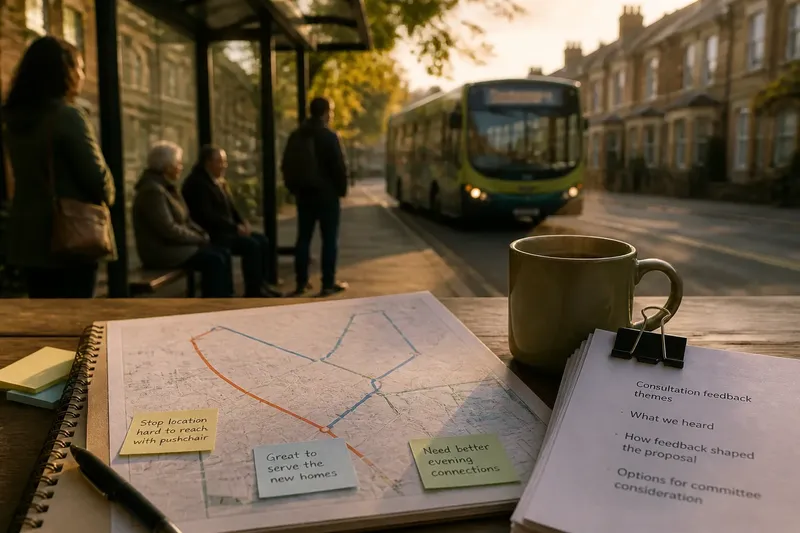
That difference shapes the evidence. A resident might support the diverted route because it serves a housing area that currently has poor access. Another might favour keeping the route because the proposed stop is difficult to reach with a pushchair. A shopkeeper might describe deliveries or customer access affected by a stop move. These responses show how a proposal meets different needs.
The count of responses may be relevant, but it is not a measure of everyone’s views. People who hear about the consultation, have time to reply, or feel strongly about the change may be more likely to take part. A consultation team can use meetings, accessible formats and targeted outreach to hear from people who might otherwise be missed. None of these methods turns the exercise into a representative vote.
How views enter the process
Once the response period ends, the transport team sorts the feedback into themes and checks relevant details. It might identify concerns about a particular crossing, a gap in evening connections or a stop location that is unclear in the plans. It can then assess whether those points call for clarification, further work or a change to an option.
Say several residents explain that the proposed stop would leave people using mobility aids with an awkward route from the pavement. The team could examine the location and report whether the concern can be addressed within the proposal. The expected observable result is a clearer assessment for the committee: perhaps a revised stop location, or a reason the location cannot be changed. The responses have influenced the material before the decision, but no response has itself selected the route.
The team’s report should distinguish what it heard from what it recommends. It may describe themes, note differing views and explain which points led to changes or further checks. This is more useful than presenting a single headline count, because it shows how comments relate to the choices in front of the decision-maker.
Look for a traceable link between a concern and the response to it.
Who makes the decision
The committee’s role is different from the public’s role in the consultation. Members review the options, the operational information and the consultation report, then make a decision within their authority. Depending on the process, they might approve one route, request changes, ask for further work or decide not to proceed.
They should be able to explain the reasoning behind their choice. That explanation may weigh several considerations that do not point in the same direction: access for one group, reliability, the effects on current passengers and whether a proposed change can be delivered. The most frequently stated preference may inform that judgement, but it does not settle it automatically.
If the committee chooses the route that received fewer expressions of support, that alone does not mean the consultation was meaningless. The important questions are whether relevant views were considered, whether the decision-maker had authority to make the choice, and whether the reasons for the outcome are understandable. A consultation has failed its purpose if people are invited to speak but their concerns disappear without explanation.
Questions worth asking?
Does a consultation response count as a vote?
No. It records a view or experience for consideration, rather than casting a binding choice between options. The process may count responses, but the total does not by itself determine the outcome.
Can a consultation change the proposal?
Yes, if the decision process allows options to be revised and the feedback gives a reason to do so. The published material should make clear what changed, what did not and why.
Who decides after a consultation?
The organisation or person with formal authority for that decision makes it, following the relevant process. Check the consultation documents to see who is responsible and whether another approval is needed.
What should happen to views that are not adopted?
The decision-maker should be able to show that they were considered and explain why they did not lead to a change. A view can be taken seriously without being accepted.
What the result tells residents
In the imagined bus case, the committee approves a revised version of one route and explains how comments about stop access shaped the change. It also explains why other concerns did not alter the choice. Residents can see both the limits and the effect of their participation: the consultation informed the decision, while the committee made it.
That is the practical meaning of the distinction. A vote asks which option wins under a defined voting rule. A consultation asks what decision-makers should understand before they choose. If you want to judge whether a consultation mattered, read the response report alongside the decision and look for how specific concerns were handled.
For any consultation, the most useful question is not simply, “Did my preferred option win?” Ask instead, “What did decision-makers hear, what did they do with it, and how did they explain the choice?”